
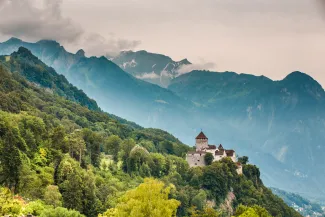
VADUZ, Liechtenstein — For travelers plotting spring escapes beyond the usual crush of Venice queues and Barcelona selfie sticks, one of Europe's smallest countries is emerging as a quietly sophisticated answer: Liechtenstein, a 160-square-kilometer principality wedged between Switzerland and Austria that most people couldn't place on a map. Cruise and tour operator Riv is recommending the Alpine microstate as a springtime destination for travelers who want premium European experiences without fighting through tourist hordes. It's a pitch that speaks directly to the current moment, when overtourism has turned once-dreamy Mediterranean hotspots into logistical headaches and Instagram battlegrounds.
Why Liechtenstein Works for Spring
The numbers tell the story of a place that hasn't been Instagram-ruined yet. According to tourism data, visitors spent just over 200,000 nights in Liechtenstein in 2024, a figure that would barely register as a busy summer week in Rome or Barcelona. For context, that's fewer overnight stays than a mid-sized ski resort sees in a single season. What you get instead is access to over 400 kilometers of marked hiking trails, nine medieval castles (four open to the public), and a capital city you can walk across in 20 minutes. The country's population hovers around 40,000, meaning you're more likely to encounter dairy cows than tour buses on most trails. Spring timing matters here. April through June brings wildflower carpets across alpine meadows, temperatures mild enough for serious hiking without August's altitude intensity, and trail access before summer trekkers arrive. New routes opened in Malbun for spring 2026 now link into Switzerland's Wildhaus region, creating cross-border loops that let you technically hike through two countries before lunch.
Castles, Capital, and Strategic Access
Vaduz Castle dominates the capital's skyline like something out of a medieval theme park, except it's the actual residence of Liechtenstein's princely family and closed to visitors beyond exterior photo ops. That limitation doesn't diminish the experience; the Three Castles Path hiking route connects Gutenberg, Schellenberg, and Vaduz castles through forested ridges with views across the Rhine Valley. The capital itself functions as a mix of Alpine village and discreet wealth management hub (GDP per capita exceeds $180,000, among the world's highest). You'll find Michelin-quality dining, contemporary art at the Kunstmuseum Liechtenstein, and wine cellars stocked with bottles from the princely vineyards along the Rhine. Logistically, Liechtenstein lacks an airport, which filters out cruise ship day-trippers and keeps visitor numbers manageable. Access comes via train to Buchs, Switzerland, or Feldkirch, Austria, then short bus connections into Vaduz. Riv's Rhine River cruises from Basel to Vaduz offer another entry point, folding the principality into multi-country itineraries that capitalize on its geographic sandwich position.
The Anti-Overtourism Play
What Riv is selling here isn't just a destination but a travel philosophy: sophisticated doesn't require crowds, and luxury experiences don't demand over-touristed infrastructure. Liechtenstein delivers castle trails, Alpine vistas, and cultural depth without requiring advance ticket reservations or 6 a.m. wake-ups to beat tour groups. Spring festivals like the Vaduz Spring Market add cultural texture without Oktoberfest-level chaos. The country's conservation focus supports sustainable tourism infrastructure, e-bike rentals outnumber car hires, and audio-guided trails let you explore at your own pace without joining groups. For travelers who normally default to Switzerland or Austria, Liechtenstein offers similar Alpine drama with a fraction of the visitors. The 15 percent year-over-year increase in visitors signals growing awareness, but from such a low baseline that it's nowhere near tipping into the overtourism territory plaguing its neighbors.
Who This Works For
This isn't a budget backpacker destination; Liechtenstein's wealth translates into Swiss-level pricing for hotels and meals. But for travelers willing to pay for quality without the Venice premium of fighting crowds for every experience, the value equation shifts. Day-trippers from Zurich or Innsbruck can knock out Vaduz and a castle hike in an afternoon, making it easy to fold into broader Central European rail itineraries. Overnight stays unlock quieter mornings on trails and access to the principality after tour buses depart, when the capital reverts to sleepy village mode. Nature and history lovers get the best of both worlds: medieval fortifications perched on ridges you can hike between, wildflower meadows framing 13th-century stonework, and museum-quality art collections in a capital you can navigate on foot in under an hour.
Strategic Timing
Booking for spring 2026 puts you ahead of any potential summer surge. As over-tourism measures expand across Southern Europe, more travelers will likely discover Alpine alternatives that deliver sophistication without the scrum. Liechtenstein's small scale means it can't absorb Venice-level crowds even if it wanted to, creating a natural ceiling that preserves the low-key appeal Riv is marketing. For travelers plotting their next city break or multi-country rail adventure, this tiny principality offers something increasingly rare in European travel: the luxury of space, trails without traffic jams, and castles you can explore without timed entry tickets. That might be the most premium experience of all.